
Can the ViaBTC Mining Guide Help You Choose Mining Hardware?
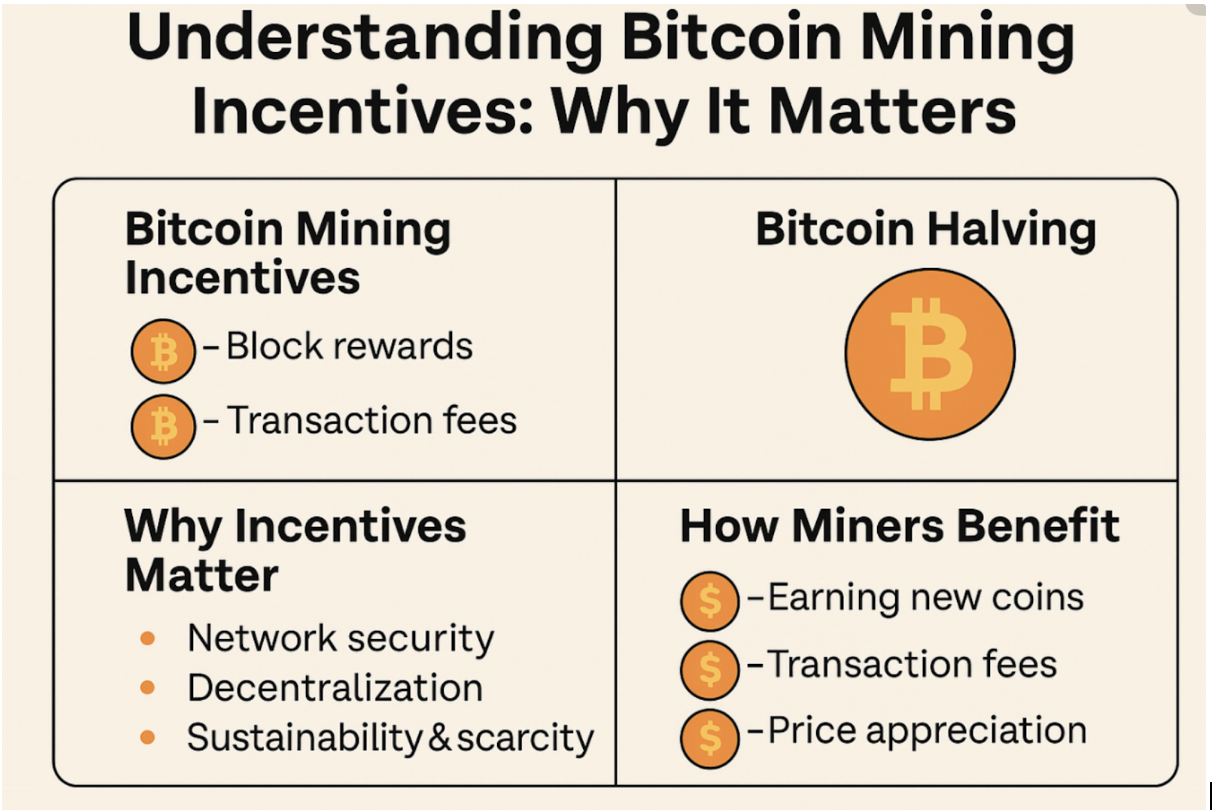
Yes. A mining guide can help narrow hardware choices when it connects hashrate, power use, algorithm support, pool fees, network difficulty, and operating conditions instead of ranking machines by speed alone. A 200 TH/s ASIC drawing 3,500 W uses 84 kWh per day; at $0.08/kWh, electricity costs about $6.72 daily before cooling. A machine using 20% less power can therefore outperform a faster unit on operating cost. For Litecoin mining, Scrypt compatibility also matters because SHA-256 hardware cannot mine LTC. Pool statistics, payout rules, uptime, hardware age, and 2024–2026 network conditions should all be checked before purchase.
Mining hardware comparisons usually begin with hashrate, but hashrate only describes computing output. A 200 TH/s Bitcoin ASIC and a 17 GH/s Litecoin ASIC cannot be compared by their headline numbers because they process different algorithms. Bitcoin uses SHA-256, while Litecoin uses Scrypt. An ASIC is built around a particular algorithm, so choosing the coin and algorithm comes before comparing models. Once that requirement is fixed, power efficiency becomes much more useful.
Power efficiency is normally expressed relative to hashrate. If a SHA-256 machine produces 200 TH/s while consuming 3,500 W, its efficiency is 17.5 J/TH. Another unit producing 180 TH/s at 3,000 W operates at about 16.7 J/TH. The first machine provides about 11.1% more hashrate but consumes 16.7% more power, so electricity price can change which unit makes more financial sense.
| Example operating cost | 3,000 W ASIC | 3,500 W ASIC |
|---|---|---|
| Energy per day | 72 kWh | 84 kWh |
| Energy per 30 days | 2,160 kWh | 2,520 kWh |
| Cost at $0.06/kWh | $129.60/month | $151.20/month |
| Cost at $0.10/kWh | $216/month | $252/month |
| Annual cost at $0.10/kWh | $2,628 | $3,066 |
The $438 annual difference in the example comes from only 500 W of additional continuous consumption. Over a two-year operating period, the difference reaches $876 if electricity remains at $0.10/kWh. A cheaper used miner can therefore cost more over time when its efficiency is materially lower, which makes purchase price useful only after operating expenses are estimated.
A $1,500 ASIC earning an estimated $5.00 per day after electricity would need about 300 days to recover its purchase price under unchanged conditions. If daily net income falls 25% to $3.75, the same calculation extends to 400 days.
Mining conditions rarely remain unchanged for 300–400 days. Network difficulty can rise as more hashrate joins a network, while coin prices and transaction-fee income can move in either direction. Bitcoin also completed its fourth halving in April 2024, reducing the block subsidy from 6.25 BTC to 3.125 BTC. Hardware comparisons based on pre-halving revenue figures are therefore unsuitable for later purchasing decisions, and current pool and network data should be used instead.
Litecoin equipment requires a separate comparison because Scrypt miners operate in a different hardware market. Litecoin's block reward was reduced from 12.5 LTC to 6.25 LTC in the August 2023 halving, while the network targets a block roughly every 2.5 minutes. Buyers evaluating Scrypt equipment should compare current LTC network conditions alongside the miner's GH/s rating and wattage rather than applying Bitcoin ASIC benchmarks.
Pool selection then becomes part of the equipment calculation because a machine's usable output depends on how it is connected and paid. Miners considering Litecoin can review current statistics through the ViaBTC LTC Mining Pool while comparing Scrypt hardware. Pool-side hashrate records are also useful after installation because a sustained difference between local and pool-reported performance can point to rejected shares, network problems, temperature issues, or unstable hardware.
A useful hardware check therefore compares advertised hashrate with actual pool-side performance over a meaningful operating period. A machine advertised at 17 GH/s but averaging 16.15 GH/s at the pool is running about 5% below its nominal rate. Short intervals can vary naturally, so a 24-hour or longer average is more informative than a few minutes of data, especially when estimating monthly electricity cost against mining output.
Electricity continues to be consumed during periods of reduced performance. A 3,500 W machine operating 24 hours still uses about 84 kWh even if pool-side hashrate falls 5%, so poor uptime or repeated thermal throttling changes the economics faster than the specification sheet suggests.
Temperature deserves attention for the same reason. Nearly all electrical power consumed by an ASIC eventually enters the surrounding space as heat. A 3,500 W miner produces roughly 11,942 BTU/h of heat. Ten comparable machines approach 119,420 BTU/h before networking equipment or other electrical systems are counted. A facility designed around the ASIC wattage alone can therefore underestimate ventilation or cooling requirements.
Cooling equipment also consumes electricity, so site-level power use can exceed the number printed on the miner. If ten 3,500 W units require 35 kW for the ASICs and ventilation adds another 3.5 kW, facility consumption rises 10%. At $0.08/kWh, that additional 3.5 kW costs about $204 per month when operated continuously, making room design relevant to hardware selection rather than an issue to address after delivery.
Noise creates another practical limit. Industrial ASIC fans commonly run at several thousand RPM, and manufacturer specifications for many machines place sound levels around the 70–80 dB range under stated conditions. Decibels use a logarithmic scale, so several miners in one room should not be treated like ordinary desktop computers. A warehouse installation can accommodate conditions that would be difficult in an apartment, office, or shared residential property.
Electrical infrastructure can be equally restrictive. A 3,500 W machine on a 240 V supply draws roughly 14.6 A before considering variations in actual voltage and consumption. Continuous equipment needs suitable circuits, breakers, cabling, connectors, and power distribution designed for the installation. Five machines at the same nominal wattage represent 17.5 kW of ASIC demand, and 20 machines represent 70 kW before ventilation is included.
Hardware age should be assessed after the site requirements are known. Older ASICs often sell for much less than current-generation equipment, yet a 25% lower purchase price does not compensate automatically for a large efficiency gap. If an older unit consumes an additional 1 kW, continuous operation adds 720 kWh over a 30-day month. At $0.10/kWh, that is $72 monthly and $864 annually.
Used hardware adds condition-related variables that cannot be read from the model name. Buyers can ask for recent hashrate records, operating temperatures, error logs, repair history, hashboard status, fan condition, power-supply information, and serial numbers. A sample covering 7–30 days of operating records is more useful than a single screenshot because intermittent failures may not appear during a short test.
Warranty coverage should then be compared with the expected operating period. A miner purchased for $4,000 and expected to run for two years represents about $167 of hardware cost per operating month before financing, repairs, shipping, tax, or downtime. Losing 30 days to a repair removes roughly 4.1% of a two-year operating window, even before the lost mining output is counted.
Downtime can be included in projections through realistic uptime assumptions. A theoretical calculation based on 100% uptime assumes 8,760 operating hours per year. At 95% uptime, the machine operates about 8,322 hours, a difference of 438 hours. For a miner expected to produce $10 of net operating income per active day under a fixed scenario, 5% downtime represents roughly $182.50 less annual income.
Revenue estimates also need more than one scenario because difficulty and coin price can change during the ownership period. Instead of assuming one daily figure, a buyer can model a base case, a 20% lower-revenue case, and a 40% lower-revenue case. If estimated net income begins at $8 per day, those cases become $8.00, $6.40, and $4.80 before changes in electricity or maintenance.
-
At $8.00 per day, a $3,000 purchase corresponds to about 375 days of simple payback.
-
At $6.40 per day, the same purchase corresponds to about 469 days.
-
At $4.80 per day, it extends to about 625 days.
-
A 20% change in daily net income therefore adds roughly 94 days in this example.
Pool fees and payout methods belong in the same calculation. A 2% fee on $10 of gross daily mining revenue equals $0.20 per day, or about $73 per year if the gross amount remained unchanged. The dollar figure may look small next to hardware cost, but it should be compared alongside payout structure, minimum payout requirements, accepted share handling, and actual pool-side performance rather than evaluated by percentage alone.
Network connection quality affects the shares submitted to that pool. Rejected or stale shares represent computational work that may not receive the same treatment as accepted work under the applicable pool rules. If one installation records a 0.5% rejected-share rate and another records 3%, the second installation is giving up a larger portion of submitted work even though both machines may display the same local hashrate.
Maintenance records become more useful once pool-side data establishes normal performance. Fans, power supplies, connectors, hashboards, dust buildup, and high temperatures can affect stability over thousands of operating hours. A miner running for one year continuously can approach 8,760 hours of use, so purchasing equipment based only on a short seller demonstration provides little information about how it behaved during its previous operating life.
Resale assumptions should remain conservative because ASIC prices can change rapidly when newer models improve efficiency. A machine purchased in 2026 may compete with later hardware offering more hashrate per watt, lowering demand for older equipment even when it still functions normally. Treating resale proceeds as optional rather than required for payback keeps the hardware comparison focused on mining performance and operating cost.
The final comparison can be reduced to a small set of measurable inputs: supported algorithm, hashrate, watts, efficiency, acquisition price, electricity rate, expected uptime, pool costs, cooling power, warranty, and current network conditions. If two machines are close on purchase price, the model with 15–20% better energy efficiency can gain an increasing cost advantage over thousands of hours, particularly at electricity prices above $0.08–$0.10/kWh.
ViaBTC's mining guidance is most useful when its pool and mining information is combined with current manufacturer specifications and the buyer's actual electricity bill. A hardware specification describes what a machine is designed to do; 24-hour pool records, monthly kWh consumption, rejected-share rates, temperatures, and 95–98% realistic uptime assumptions show what the installation is actually doing.